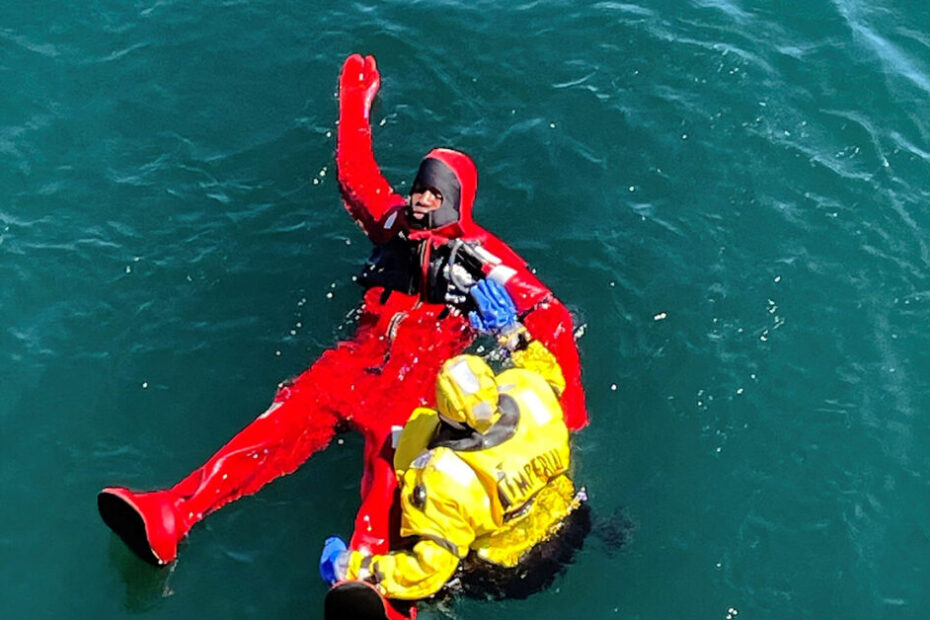
NPFVOA’s In-the-Water Survival Training is a practical, hands-on course that teaches essential cold-water survival skills for maritime professionals. This approximately 4-hour training prepares crew members to respond effectively in real-world emergency situations by practicing immersion suit donning, vessel abandonment procedures, and liferaft entry in actual water conditions.
Conducted throughout the Greater Seattle area, this customized training serves commercial fishing vessels, workboats, and passenger vessels from throughout Puget Sound, Oregon, and Alaska. Training can be scheduled at your location or at our partner facilities.
Who Should Take This Course?
This In-the-Water Survival Training is ideal for:
✓ Commercial fishing vessel crews working in cold-water environments
✓ Vessel operators and captains seeking practical crew training
✓ Maritime professionals who need hands-on immersion suit practice
✓ Crew members preparing for offshore or Alaska operations
✓ Workboat and small passenger vessel personnel
✓ Anyone who wears an immersion suit as part of their job
Looking for comprehensive survival training? Our 12-hour Personal Survival Techniques course provides more extensive STCW-compliant training including classroom instruction.
What’s Covered in the In-the-Water Survival Training
This hands-on practical course focuses on critical cold-water survival skills:
Immersion Suit Operations
- Proper donning techniques under realistic conditions
- Adjusting suits for maximum thermal protection
- Buddy checks and assisting crew members
- Understanding suit limitations and capabilities
Vessel Abandonment Procedures
- Safe water entry techniques
- Group coordination during emergencies
- Staying together as a crew
- Communication in the water
Liferaft Entry and Use
- Boarding a liferaft from the water
- Assisting injured or hypothermic crew members
- Maintaining stability during boarding
- Post-entry procedures
Cold-Water Survival Awareness
- Recognizing hypothermia symptoms
- Conserving body heat in the water
- Maintaining calm and focus during emergencies
Training Location & Course Details
Where: Training location varies based on class size and your needs. We conduct training at:
- Fishermen’s Terminal
- Pool facilities throughout the Seattle area
- Your vessel location (if suitable facilities available)
Duration: Approximately 4 hours
Class size: Flexible – training can accommodate individual crew members or entire vessel crews
Accessible from: Seattle, Tacoma, Everett, Bellingham, Edmonds, Bremerton, Port Angeles, Juneau, and throughout Puget Sound and Alaska
Pricing: Cost depends on class size and location. Contact us for a customized quote for your crew.
Upon Course Completion
Successfully completing In-the-Water Survival Training gives your crew:
- Practical experience donning immersion suits under realistic conditions
- Confidence in abandoning vessel and entering liferafts
- Hands-on skills that can save lives in cold-water emergencies
- Better understanding of survival equipment capabilities and limitations
This training complements your vessel’s monthly drills and provides crew members with invaluable real-world practice that classroom training alone cannot provide.
Why In-the-Water Training Matters
Reading instructions or watching demonstrations cannot replace the experience of actually donning an immersion suit and entering a liferaft in the water. This hands-on training:
- Builds muscle memory for emergency situations
- Reveals common mistakes in controlled conditions
- Increases crew confidence in survival equipment
- Identifies equipment issues before an actual emergency
- Reinforces the importance of teamwork during vessel abandonment
Cold-water immersion is one of the greatest risks facing North Pacific mariners. This training ensures your crew knows exactly what to do when seconds count.
